Showing posts with label Culture. Show all posts

Saturday, May 05, 2007

Here is a column from the death row prisoner Mumia Abu Jamal:

IMUS AMONGST US


(Column written 4/14/07 by Mumia Abu–Jamal)

( With the ending of Don Imus’s radio and TV career has arisen a perverse (if utterly stupid) caterwaul from conservatives, who are (to hear them tell it) newly–born converts of free speech, and equally frenzied adherents of attacks on the Reverends Al Sharpton and Jesse Jackson, as if, but for their activism, their pal Imus would still be on the airwaves.

Some have added the oral antics of various rap artists, to somehow prove that Imus was treated unfairly for using equally ugly terms to refer to Black women.

This noise from the fascistic rightwing of American political life is a vital clue into how they see the world, and thus a reflection of how they sell this view to others.

It shows how deeply race dwells in white consciousness, and how it is like an inner searchlight that blinds as much as it illuminates.

These so–called conservatives see Imus as ‘one of us’, and as such they shared his pompous, good ole’ boy, spit–on–the–rabble racism that passes for the norm in the nation: it just so happens that he spat on the wrong group of girls this time.

And neither the Revs. Al nor Jesse starting the ball rolling against Imus, although it may’ve seemed so from TV.

The videotape of Imus went from an almost unseen perch on MSNBC to the net, where it spread like a virus. Nonetheless, bloggers picked it up and passed it on, and the more folks saw it, the more it spread. It became a living thing, nastier and nastier each time it was replayed.

The almost juvenile rant against rappers also fades upon a moment’s reflection; for, while it is undeniable that some of what is said is naked misogyny–a profound hatred of women–it’s obvious that rappers have no where near the social or political clout of Imus.

When’s the last time you’ve seen a rapper kick it with a candidate for U.S. Senator? When’s the last time you’ve heard of a rapper poppin’ some questions to a Mayor–or a Governor?

People who wanted to be president flocked to Imus, like supplicants kissing the ring of a bishop, because he had the daily ear of millions, and his blessings meant votes.

No rapper in America can say the same.

Ultimately, it’s not about power, and precious few rappers have any power. In fact, their ‘bling’ is an attempt to project a power (or wealth) that most of them do not possess.

Sociologist Zine Magubane, of Boston College, made that point in dramatic terms in his article, “Globalization and Gangster Rap: Hip Hop in the Post–Apartheid City” (citing the work of journalist Norman Kelley):

In an insightful article on the political economy of Black music, Norman Kelley describes how the relationship between the six major record firms (Warner, Polygram, MCA, BMG, Sony, and CEMA/UNI) and African–American artists as a ‘postmodern form of colonialism.’ He notes that rap music, although it ‘forms the very foundation of the $12 billion dollar music industry in the United States’, exhibits an history pattern typical of African–American aesthetic products like jazz and blues which, although created largely by Blacks, were under the corporate control of Whites. Black–owned production companies like Uptown Records, Def Jam, and Bad Boy, Kelley explains, ‘do not control a key component of the music–making nexus, namely, distribution.’ For example, the albums produced by Master P’s No Limit Records as well as those by Roc–A–Fella Records (owned by Damon Dash) are distributed by Priority Records. Those produced by Cash Money Records are distributed by Universal, while Sean Combs’ Bad Boy label is distributed by Arista. Thus, although young Black entrepreneurs have ‘been able to swing the balance of power somewhat in their direction, they are still far from having complete dominion (because) in the music business distribution is the final battle ground. Because African–American artists have virtually no control over the domestic distribution of their music, they likewise have no control over international distribution. Thus, white owned and controlled media conglomerates determine which African–American cultural products enter the global arena. (Fr.: Magubane, Z., in: Basu, Dipannita and Sydney J. Lemelle, eds., The Vinyl Ain’t Final: Hip Hop and the Globalization of Black Popular Culture. (London/Ann Arbor, MI.: Pluto Press, 2006), p. 211.)

Imus was a creature of white corporate and political power, who made millions playing to the smallmindedness of millions, who wanted to snicker at the lot of those worse off than them.

Unless I miss my guess, someone will hire him to do it again.

There’s always a market for that.

–MAJ


I to believe that while the cretin he writes of can say what he likes no radio station is obliged to have him on their airwaves.

A few words about music, though. I must confess that I quite like rap, in spite of (or maybe even partly because of) the violence in some of it's lyrics. Whether it's intention is satire is to me not the point - the point is that it reads as a satire of the excesses of American capitalism. So does the whole 'bling' or 'ghetto' culture, large cars, big gold chains etc. It hence works as an exposure of capitalism by taking it's excesses to the most extreme, with no subtlety whatsoever, and showing us that it is all ultimately fake. The fact that it is an act resulting from a lack of power rather than power gives it a subversive edge.

Now - I do not wish to be accused of being pro guns, violence, sexism and all the rest. I am not. But those who sing about such subjects seem to me to be simply tallking about what they have seen and the conditions they have grown up in, whether they do so critically or not isn't the point. Realism is not obliged to be critical. If people complain about the lyrics in such music I would tend to suggest that they take measures to allieviate poverty and crime. If they did so people would feel less of a need to sing about them and issues related to them. If the music sometimes seems to glorify crime it is only because people have ways of coping with their lives. One way of tolerating conditions that are, on the whole, negative, is learning to put a positive spin on them if not exactly enjoying them.

As for the misogyny of the lyrics - All those unsubtle men are doing is making explicit in a not very subtle way the way that most men, with their distrust of women, feel from time to time. It is no crime to expose what is already implicit in society. I'm not saying that distrust of the opposite sex is unique to men - women no doubt often distrust men as much as the other way round. However, although this is changing men have traditionally held more power in society. Black men who produce rap music perhaps feel this power (i.e over women) is the only power they have, although it is an illusory power. Black women, I have often noticed, can be extremely strong, not exactly downtrodden or oppressed. The women who tend to revel in victim status are those who are white, middle class, and very privileged in comparsion with many of their Black sisters.

As far as rap goes, though, sisters are quite capable of fighting back. Anyone heard Lil Kim, Missy Elliot? I'll end with a pic.....

Tuesday, February 27, 2007


The Stars Down to Earth.....

The spare (and rather old) pc I have been temporarily using is near it's dying day. Hopefully I should have a new one by the weekend (fingers crossed). My own phase of depression right now has stopped me also from keeping abreast with the current affairs as I do normally. Hence my recent absence from the blogosphere in general. But while this pc may be dying I can assure you all that I am still alive and so will this blog be. I will soon update my links as to include Ms Melancholy's interesting blog among them, and Elle's too.

Something I have found worthy of blogging about - I have been reading a curious essay by Theodore Adorno, a philosopher who was involved in what was known as the 'Frankfurt School'. It is the first time I have given him a shot. It is not easy reading but nonetheless it is worth persevering with. The name of the essay is 'The Stars Down to Earth' - it is an indictment of astrology. I intend also to read 'The Culture Industry' when I get the chance.

'The Stars Down to Earth' has made me think. While I have never presumed to take astrological columns seriously I have regarded them as mostly being for their part harmless. I have thought twice after reading that.

As far as Adorno was concerned their insidiousness lied partly in the fact that nobody really professes to read them for anything other than a bit of fun. He compares their sense of unseriousness with some of the exagerration involved in some fascist propaganda. However, if the columns had no psychological appeal they would not be so widely read. He points to the fact that their 'predictions' usually say nothing or at least very little about the source from where their supposed authority derives. There is also the irrational belief that astrology not only can predict what may happen in our day and how our time should be used but can also tell us about our respective personalities.

What the newspaper and magazine columns promote is a very bland form of social conformity. They both condescend to and similtaneously flatter their readers. The intended audience is comprised of what Adorno termed the 'semi erudite', or the lower middle classes. The columns address their audience as though their actions are far more important to the scheme of the system than they actually are.

The status quo is taken for granted, and the readers are advised (no matter what their date of birth) to roll along with it so that things run smoothly. Work and pleasure must be kept strictly seperate and one may never intrude upon the other. Hence work must remain pure drudgery while no seriousness should intrude on leisure, making it in effect rather empty. This is one of the legacies of the protestant work ethic and the effects of industrialisation and a technological society, bringing in work which is largely monotonous, tedious and even pointless a lot of the time.

The stars are an external authority that cannot be challenged. The only control the believer has over his or her fate is to behave according to the advice of the experts so that disaster may be averted and they may prosper in the system which is taken as pre-ordained. The columns give the illusion that the reader is in control while at the same time promoting obedience to a higher authority which is as impersonal as the social system itself.

The appeal of these superstitions is largely down to people losing what was their animistic attachment with nature (dependence on the will of the gods and the seasons, etc) while not yet developing the maturity to be able to think with complete independence and rationality. Hence the contradiction with modern superstition. Astrology columns are also unique in the sense that they find their circulation via mass media, there is no direct contact with the witch doctor or shaman. Hence Adorno's description of them as being a 'secondary' rather than a primary superstition. They do not fulfill the function of religion yet they are a small daily dose of comfort rather like a soap opera.

I will not go too far in debunking astrology myself - but I have long been amazed at the unquestioning faith displayed by believers. By modern calculations there should not be 12 but 13 signs of the zodiac. Everybody's sun sign by traditional standards would therefore be wrong as it would be one month ahead. Hence I would not be Pisces but Aquarius, the preceeding sign. Yet the 'experts' have ignored this and so do their followers when it is pointed out to them. See: here and here.

I have a friend who bores me endlessly with her astro babble. Every quirk in a persons' behaviour is, according to her, down to when they were born. Despite my protests that I am not a believer she still works on the assumption that I am or must be deep down as who can deny what is to her the ultimate truth? My mother is also a believer and I recall having that nonsense rammed down my throat even as a child. I tire of men using astrology as a chat up line on me, working on the assumption that all women believe in astrology. Unfortunately more women do seem to go for this than do men, and I don't have the time in this post to explore the reasons why. Perhaps it is partly due to the fact women have been more likely to be in a subordinate or dependent position. People who are or have been oppressed in a particular way may be more inclined to look for certainties, when they themselves have little control over their lives. This, for Adorno, was one explanation for the general appeal of astrology. Also it offers a sense of comfort to a weak ego or a low sense of self worth. Whatever one's educational level or place in the hierarchy they can still find themselves 'in the know' via possessing knowledge not shared by the ignorant or uninitiated.

The only grain of truth this superstition may have is the simple law of gravity. The phases of the moon do affect women's menstrual cycles and it has been speculated that it may affect our moods too (both sexes). Maybe the location of other bodies can have some impact on our bodily chemistry and our minds, but this is by no means a scientific fact but a mere speculation. And it gives me no reason whatsoever to treat an entire superstititon with no scientific basis or rationality at all as though it were fact. There is far more sense behind traditional religion as while unproven the existence of a creator may be a philosophical possibility. Not astrology, though.

Thursday, February 15, 2007


UK Worst Place for Kids....

This story has distressed me for several reasons. It serves to remind me of why I have strong doubts about bringing children into this world for one thing. Living in a non child friendly country like Britain does not help.

Like most people I can only speculate on the reasons for it. The individualism of the 1980s with it's economic restructuring went a long way towards breaking down community ties and led to a greater degree of social atomisation, for one thing. The Scandinavian countries with their strong Welfare States seem not to have so much of a problem with their youth, and neither do countries where family ties remain strong.

Alongside this goes the long work hours culture of Britain. Most two parent families these days have little choice but for both parents to work, often full time, and this results in them not being able to spend as much time with their children as is ideally needed for their growth. The State is still trying to grasp an idea of flexible working hours and a family friendly workplace but much of it remains hot air. A rush to make profits now appears not to make for good investment in the future - children of course being the future.

It is little wonder that the birth rate is declining as the incentives for having children are highly neglible in the UK. But something will have to be done to reverse this trend if the government do not want to struggle with an ageing population with not enough people of working age to support them.

Aside from the obvious things which spring to mind such as flexible working, better welfare for poor families and children, accessible child care etc we could also do with treating our children as human beings in their own right, not as mere extensions of ourselves. A child friendly society recognises children's needs and accepts them as part of that society. We have a long way to go. The constant demonisation youth receive in the media is a big part of this problem.

Thursday, January 18, 2007

Crapcartoontown..

Hey, I saw the infamous Popetown. My opinion? The BBC axed it because it was not funny. And it would upset a religious group in the bargain, so why take such a risk for what is essentially a load of rubbish? If I was in the position of the BBC I'd probably have made the same decision, not so much for fear of upsetting people but because showing complete rubbish that will upset people at the same time is not worth it. Those who want to can buy it on video, nobody should pay a license to watch crap TV. Not because they have the right not to be offended. To show something that is offensive yet funny is worth it. To show what is unfunny yet inoffensive may be worth a gamble, a rubbish cartoon can fill the spaces. But a crap cartoon which may offend in the meantime? No point at all.

Jerry Springer The Opera was funny. But this aint. One word? Yawn.

'Reality' Shite....

For once in my life I am with the Graun and it's commentators entirely (see link). I will plead with my friends on the blogosphere who give this vile show credibility and treat it as harmless fun to stop and think again.

Shilpa may be famous and can probably handle it. That is not the case with everyone who enters the Big Brother house. Most of them are ordinary people who are very often vulnerable with mental health problems. Which makes them prime candidates for bullying.

The treatment of Shilpa on CBB appears to say more about the mentality of the contestants than it says about her. Which isn't funny either. Ignorance and bigotry are not fun to watch, neither are the people who display them. Neither is it fun to see one person singled out like that.

I was bullied at school so I recognise the mentality of many of the contestants and the audience. A 'freak' or somebody who is at least different (Shilpa is Indian, don't forget) is singled out to be a scapegoat and along with being filmed gets their face rubbed in the dirt of the British tabloids. You may say as much as you want that they go on the show voluntarily - indeed they do. But people do all kinds of stupid things voluntarily. Does that mean you must validate it by watching the spectacle?

Now don't get me wrong - I would oppose any kind of censorship. Ultimately if the contestants want to make idiots of themselves by taking part in what is a modern day freak show ( I believe Victorian circus freaks got paid as well, or they got some kind of a living at least) the decision must rest with them, and alas, the producers who have the idea of filming such a thing. Whatever the intelligence or mental health of the contestants I don't want to strip them of free will and look like a patronising middle class moraliser. But that does not mean I have to watch the show. Neither does anyone else.

To the left of the shows viewers I'll posit to them that most of the contestants they laugh at are members of the class they claim to champion - the working class. How can you claim to champion a group of people yet revel in their (partially self inflicted) humiliation at the same time? Most of the people on that show are working class because they are the ones poor and desperate enough to need the money. Toffs don't need it, neither do the 'educated' middle classes. Celeb BB may be slightly different - but hey, we have a new kind of celebrity, don't we?

What does the show say about the mentality of the audience? That you are following what is in essence a pack mentality. You should know better, and if you don't so far then please think about it a bit. Viewing that stuff is worse than viewing S&M porn - hell, there is not even any direct sexual release. It serves to satisfy a kind of sadism but one which is repressed in the British masses, one which has its outlets in the likes of this show. It serves the voyeur but there is nobody naked.

Just some poor idiot being ganged up on, for God's sake. Is it really what it's cracked up to be? True, some of the people who participate may well be exhibitionists. Good luck to them. But what about those who are not exhibitionists but are simply vulnerable for whatever reason? Why engage in what is essentially an act of voyeuristic sadism? If you inclined that way there must be other means. Join a fetish club or something.

As I've stated, the racist treatment of a wealthy actress by a few ignorant people may not in the long run be much to get worked up over. She may well be together enough to handle it by now, having been in the limelight for so long. Actors are used to this, they are exhibitionists by trade. But not everyone who goes on BB is a professional actor. Most are not, despite their hopes of becoming famous.

I forget who it was who said that acting was the most masochistic form of exhibitionism. But they were wrong. Reality TV has turned out to be, a media which is yet at the same time is not acting. It is midway between acting and 'reality'. It is not 'reality' yet it is not a film or play either as it is not scripted. Yet it would also be wrong to call this improvised acting. The 'actors' are playing themselves and they do not know when they may be filmed.

Saturday, January 13, 2007


The Man in the Mask......

I’m not normally one for Batman type comic book action movies. I did, however, enjoy ‘V for Vendetta’ on video yesterday, based on an old comic book.

It was disturbing as it was set in a futuristic Nazi Britain. With concentration camps, a fuhrer, the cross of St George in red with a black background, uniforms and all the other paraphernalia. It was also set in a modern context, with Muslims replacing Jews. The poisoning of London’s water supply by the fascists (for which they blamed the terrorists) was the Reichstag fire which consolidated their power. References were made to the Iraq war and protests.

However, it is highly unlikely that fascism would take on its classic form were it to come into power. It would be far more subtle. Britain is not a fascist State at present, but the increasing surveillance we live under and the added powers given to the State do pose cause for concern to anyone who cherishes liberty.

The superhero goes simply by the name of ‘V’. He wears a Guy Fawkes mask to cover his burns. His aim is to get revenge on the government who were responsible. One by one he kills party members, gaining support among the population to eventually topple the regime by blowing up parliament. His supporters show their solidarity by donning a mask to match.

What makes it most interesting, in my view, is the relationship between him and his lover. Young Evey never completely knows the man who has taken her under his wing. This is symbolised most obviously by the mask, which he never removes due to his disfigurations. But the mask symbol goes way back into ancient mythology. The marriage of Eros and Psyche springs to mind most readily, where the Olympian God would not show his face to his mortal wife. Psyche is in turns enraptured by him then frightened of what he might do. His distance does not allow her to fully know him.

The comic-book love affair depicted in the film is in part a retelling of this ancient myth with its many layers. To an extent we all wear a mask, as Carl Jung was keen to stress. The persona we show to others does not tell everything about us. This is why the mask has long been used to symbolise the theatre. But what kind of lover is Eros, or Mr V? What kind of a man keeps himself from a woman in this way, and what kind of woman loves such a man? The answers can be many. The masked man is more of an evocative symbol than ‘the masked woman’, which should tell us something about sexual roles and behaviour. Most important is the fact that we can never completely know another person. After even many years together a woman may not completely know her husband, and vice versa.

Not knowing whether the masked man is a hero or villian (due to his unpredictable nature and the part of himself he deliberately keeps back) is part of his allure.

Thursday, January 11, 2007

Dr Fell and New Edinburgh.....

Investing people and places with symbols is an ancient thing. Some of us may be able to divorce our experiences from our surroundings, but I think more of us tie them together than do not.

I have been writing of my travels, relating both good and bad experiences. Recently my musings have been negative but they are just a reflection of my state of mind. It is no insult to the place.

I wrote earlier of the Southern city of Christchurch. I liked it, despite it being a very English town (or perhaps because of - who can say?) Despite all what I heard about it being a crime capital with traces of English snobbery, puritanism etc and all the things I moan about back home I still received good vibes from it. But what the hell do I know just being a visitor?

I later wrote of Dunedin and I felt obliged to say good things about the place so as not to look like a complete idiot. Sure, I could see there was a lot of art there, and it had a lot of culture for a town which is small by British standards.

But if I'm going to be totally honest - it was a case of 'Dr Fell' as far as me and that town went. I got bad vibes, I didn't like the place and was unable to articulate what it was. Perhaps something to do with me being Catholic and it being a noticably Scottish protestant settlement? It being a university town off season and quiet due to the students being away? But no. Neither of those things defined my feelings and my wishes to leave the place asap. And I don't know if it was actually anything to do with the place or if it had anything to do with my circumstances (which looked brighter then than they do now, although there probably had been a storm brewing in the background without my knowledge).

The 'deep South' (for want of a better term) is said to be a bit of a mad place. Dunedin once had an alternative rock scene (something I would have liked) but that died with the collapse of the 'Flying Nun' record label. The boys in the region have been known to do mad things like throw surfboards out of windows and self harm. Janet Frame, one of New Zealand's best known authors, was born and grew up there. Her work is very intense because she suffered mental health problems.

Was it the madness in the region that I was picking up on? God knows. Seeing the touches of madness in myself it may be something I am sensitive to. But so as not to look a total idiot I shall just put it down to old Dr Fell.

Thursday, January 04, 2007


The Queen.....

Happy new year all.

As to keep this blog one which is a commentary on news and culture I shall lay off the personal stuff for a while. Washing my dirty linen in public is not a pretty sight.

Any more than the debacle involving the death of Diana, Princess of Wales, ‘People’s Princess’, ‘Queen of Hearts’ etc was a pretty sight.

I saw Helen Mirren star in ‘The Queen’ the other night. And I was impressed by her performance. Along with the convincing portrayals of the Duke of Edinburgh and Alistair Campbell. The political machinations behind the scenes of the newly elected Blair government were interesting, to say the least.

I hate to say this – but the royals came off better in this than did the British public. Don’t get me wrong – I felt very sorry for Diana and her premature death was a tragedy. Her troubled marriage and her mental health problems made her a figure who could be related to by people of all classes. I don’t buy the line promoted by many leftists that she was nothing but a rich bitch. She may have been an aristocrat but she was by no means a happy one. One who did not have the skill of keeping her emotions under control. But, I did not know the woman personally. Therefore her death meant little more to me than would that of any other stranger. I did not buy into the mass hysteria, although I understood why she was a figure related to by ordinary people. That is as far as it goes.

During the movie the Duke of Edinburgh remarked on the hysteria over the death of a woman they never knew and said ‘And they think we’re mad?’ Likewise, the Queen Mother advised her daughter not to capitulate to the whims of ‘a bunch of hysterics with candles’. They wanted it kept private, but in the end the Queen had no choice but to give the fans of her former daughter in law what they wanted – a personal visit with a live address on television, having already conceded to the demand for a public funeral. It could not have been easy as the Queen is not of the same generation of Charles and his siblings, with their messed up love lives and their public relations disasters. Charles was portrayed as being more empathetic to the public’s feelings for his former wife than was his mother. And face it, the Queen could not have had much love for Diana, who since the marriage had been from her perspective nothing but trouble to her family. Any affection was nothing beyond the fact that Diana was the mother of her grandchildren, William of course being in line to be king one day.

I found myself not exactly liking, but to some extent respecting and admiring the Queen’s character. Neither am I a fan of the institution. But she was brought up to keep her emotions under wraps and never to express them in public. She can be admired for keeping it together, at the very least, which is more than could be said for poor Diana, the product of a fairytale that was not to be. The cold and stiff upper lip portrayed by Queen Elizabeth contrasts with the open displays of vulnerability displayed by Diana during her lifetime. Both may have their ups and down sides – but it seems to be the Queen’s path that wins through in this world, for now. Although the cult of celebrity may indicate a shift, as many people speculated during the Diana spectacle.

Wednesday, December 27, 2006

Kiwi and Aussie Chavs (Bogans)....

It seems in australia and New Zealand 'chavs' are called 'bogans'. But they seem nowhere near as subject to hatred and ridicule as are their British counterparts. This site appears to be the nearest Australian equivalent of the British 'chavscum' site. It appears to be relatively benign in comparison with 'chavscum' and I do wonder if the creators were bogans themselves..
'Littledick' and the Sewer Press.......

Here is a piece of bile from the Hate Mail's Little Dick. The murder victims in Ipswich evidently asked for it, according to him. They deserved what they got, had it coming, blah blah. If anything their deaths were a good thing as there are five fewer heroin addicts and sex workers in the UK.

I hope he one day gets an obituary that is as hateful as this one. I hope whoever chooses to write of his demise in the pages of the 'Graun' points out his total failure as a human being, and what a vile and stinking specimen of a man he was. What does Littledick do for humanity? Does he do any 'missionary work' in Darfur? Has he discovered any breakthroughs in medical science? Fat chance.

He is far, far worse than any heroin addict. He makes a living out of writing hate lit for the equivalent constituency of those who brought Hitler to power - the lower middle classes, with all their projected frustrations and pent up rage. Muslims, 'white trash', economic migrants, asylum seekers - in other words all those who are more vulnerable in society than themselves. I don't absolve the Mail's readership as was there not a market for Littledick's bilge he would not write it.

But to dance on the graves of five murdered women on the grounds that they were sex workers and heroin users should even make the readers of the Mail blanch a wee bit. However, I wouldn't be in tears if Littledick popped his clogs. Therefore I wouldn't expect him to shed any crocodile tears for the vulnerable who he despises. But I'd at least have expected him to have had the decency to have respected the feelings of the relatives of the dead women and have written nothing about it. It seems there are no depths to which he will not sink. It is lower than gutter journalism - 'sewer press' would be a more apt description. To expect any shred of human kindness or decency from this piece of slime is clearly is too much. Go to hell, Richard, or more accurately to the sewers.

It is vicious and bigoted to reduce heroin users down to any one thing just as much as it is with sex workers. Some heroin users I have known have been among the most gentle and sensitive people I have met. Perhaps too nice for this world - a world that stinks because it contains people like Littledick. Not because it contains heroin addicts, sex workers, Muslims, asylum seekers. etc etc.....

Wednesday, December 20, 2006

The British Tradition of Puritanism and Sleaze (and the Myth of Nancy)........

I.

I came accross a copy of a John Bunyan book yesterday in the public library. 'Puritanism' the writer on the sleeve commented, 'is undoubtedly part of the English character'. I don't know if this is an aspect of my character that I am unconscious of. But while I cannot help but agree on the whole with that statement, it is not an aspect of the national character that I take pride in by any means.

But it is alive and well in the press, in Westminster, in the pressure groups, on the web and in the homes and the streets of the United Kingdom. It can exist similtaneously in the pages of the Graun and the Torygraph. It is a big part of the heritage of both English socialism and feminism (one main reason why I don't really identify myself with either of these traditions, which are essentially as middle class as George Orwell once pointed out). It is what causes the English to be more preoccupied with the sex lives of politicians than the Latin countries. It was this Anglo heritage that almost brought down Bill Clinton.

Sexuality, when it is repressed by puritanism, becomes 'dirty'. Part of the thrill of British sex is down to the belief that something wrong is being done, that a trangression is taking place.

This came to my attention after having read an Emile Zola novel (French writer of the late 19th century). it was entitled 'The Kill' and was a depiction of the decadence of the bourgeoisie of the second empire. There were some fairly graphic sex scenes. I realised that such a novel would not have even been penned, let alone published, by any respected English Victorian author.

I remembered the scenes of 'Oliver Twist' (one of my favourite Victorian novels). I recalled the way that the fact Nancy was a prostitute had to be spelled out by Dickens in the introduction as any description of her trade would have been considered indecent in the novel. Contrast this with Zola's (Zola often being described as the 'French Dickens' for his realism) 'Nana' - an entire novel being devoted to the tragic life of a Parisian courtesan from a working class background. The sexual activities of Nana were described just as graphically as was the bourgeois sex of 'The Kill'.

Let us compare the stories of Nancy and Nana (Paris and London, a Tale of Two Cities, Nana and Nancy, a tale of two.......).
Both women come from poor working class backgrounds. Nana's upbringing is documented in Zola's earlier novel 'L'assomoir', which describes the lives of her alcoholic parents in the Goutte d'Or district of Paris. Nancy's background is only referenced briefly in her discussion with the middle class virgin 'Rose' - but is taken to be not unlike that of Nana. Here, however, is where the similarities end.


Zola does not morally endorse Nana's profession. Her tragedy stems partly from her greed. But it is made clear that Nana decided herself to embark on her profession, and is relatively in control of her work. She gets involved briefly with an abusive boyfriend but it doesn't last that long. Her downfall comes more with the corruption of one of her wealthy clients with a fetish for bondage. Like Nancy Nana has to die, but she catches typhoid).

Nancy, on the other hand, is an unwitting victim. She did not embark on her profession via her own choice but was bullied into it by Fagin and her violent partner Bill Sikes. She was 'led astray', in other words. And she is full of remorse and self pity for what she is, a trait noticably absent from the unrepentant Nana.

Nana and Nancy respectively can be seen to symbolise the British and the French attitudes towards the sex industry. Nancy remains the perpetual archetype for the downtrodden English prostitute. Every woman working the street is Nancy. Every Nancy has a Bill. The shame attached to the sex industry makes it all the sleazier.

I split this into two parts as it is long and not on a straight continuum. Please read on......

II.

The Myth of Nancy (Continued).....

We know the story of Nancy. We know that she met her death at the hands of Bill Sikes, her 'bully' (Victorian for pimp). She was a pure victim of circumstance, of poverty and of male oppression.

I'm glad in a sense that I'm not in the UK right now. The tragic murders in Ipswich will bring the puritans out with no leash, snapping their jaws and using the deaths of these poor women for their own agenda. Agenda being to attempt to prove that all sex workers are Nancy.

Despite New Zealand's law reform, this attitude has found it's way into the press here. A hack named David Harrison writes an article entitled 'Stark Truth of the Sex Trade'. He comments that the murders have shone a dismal light on the extent of prostitution in the UK. Why, I could almost be at home. I'm feeling homesick already, in fact. And guess what? The article is couresy of the good old Torygraph, given to the 'Dominion Post'. Nice one.

'Britain's dark underbelly is a seedy world of desperate, drug addicted women who sell their bodies for their, or their pimps, next fix of heroin or crack'. Harrison unquestionally cites the home office stats on the prevalence of drug addiction among the UK's streetwalkers (stats which I pointed out yesterday were unreliable).

The drugs come early, most are offered heroin by their abusers, and are forced on the streets to feed their habits and pay their pimps (bullies). Some are 'launched' as early as the ages of 12 or 13 (as was the case with Dickens's Nancy, led astray by Fagin and Sikes).


Harrison writes "The street girls (sic!!) are the most vulnerable "workers" in Britain's expanding sex trade". He puts the term workers in inverted commas.

Such an article could just as well appear today in the Graun as the language is identical, patronising while denying sex workers their rights as sex workers. I am not questioning the fact that the vulnerable women he describes exists. I am sure they do. I don't doubt that there were women like Nancy who actually existed at the time Dickens was writing either. I have no doubt that the women are predominately from poor working class backgrounds either (I don't like the term 'underclass' used on the British poor). The fact that such conditions persist is a condemnation of 21st century Britain.

But it is misleading to suggest as he does that almost all streetwalkers are as he describes. They are not. Not all of them have a pimp or bully. Not all are on drugs. Some are simply freelancers who don't want to pay a brothel keeper and do not have the means to set up themselves or work from home. But what about minders? The issue is not one of the men themselves but their behaviour, and whether or not there is coercion taking place. Buying drugs for a partner doesn't necessarily mean he is forcing you either. The options of the men are often just as limited as those of the women. It may make more sense if you are a couple of addicts for the woman to sell sex rather than for the man to do a burglary and land himself in prison. I am not condoning these conditions, simply being straight and avoiding the implication that all partners of sex workers are 'pimps'. The drugs issue will of course be partly resolved by the decriminalisation or legalisation of heroin use - but few people promote this as an option when discussing the issue of addicted sex workers.

But I'll tell you what makes me mad. It is hard for me to express how I feel about this organisation using polite language. But I'll try. Harrison quotes Diane Marshall of Britain's 'Poppy Project', the home office funded programme to provide shelter for victims of sexual trafficking. Don't get me wrong - this in itself is something I would support. I believe that women abused in such a way should be given shelter and support, and it is a good thing for the British government to provide this. But alas, they are giving the money to the wrong people for this purpose. 'Poppy' are connected to a group known as the 'Lillith Project/Eaves Housing' who have a whole other agenda.

These ladies are continuing in the notable tradition of the 'National Vigilance Association' - to stamp out vice and public immorality. They are modern Victorians. They oppose prostitution being defined as 'sex work' - insisting it should remain 'prostitution' (root - to commit an immoral act for money). Yet how do these feminists do this without condemning the fallen women they wish to save? Easy. They use the term 'prostituted women' - meaning that nobody is doing such work voluntarily. Taking their cue from the Victorian social reformers, they believe that no woman would choose to work in the sex trade, all women being forced via economic or social circumstances beyond their control.

Marshall blames the 'normalisation' of the sex trade for the murders. What utter crock. What of the women murdered by partners and men who they know, women who are not sex workers? What is to blame for that? Monogamy? Marhsall praises the 'good old days' when "it used to be taboo to go with a prostitute, something to be done furtively, something that brought shame if you were found out". Aah, the joys of English puritanism. So it is somehow not so bad if it remains a dirty secret, Ms Marshall, so as to protect the virtue of decent ladies like yourself? It is better that sex workers remain stigmatised, the lowest of the low, so as to seperate themselves from respectable women.

Please don't think that Marshall's project to rescue sex slaves is anything new or remotely radical. It isn't. Victorian groups consisting of middle class women very often indulged in such projects - providing safe houses for fallen women who wished to leave the trade. The 'female mission for the fallen' distributed tracts outside brothels protesting the exploitation of women. Dickens himself was involved in such a project.

Predictably Harrison does not interview any sex workers themselves, only police, charities, and their self appointed redeemers Ms Marshall and a group named "Women for Justice' - who claim that drug addiction, homeless rape and murder are occupational hazards of the sex trade, therefore it is hardly a career choice. Yet they don't consider the possibility that criminalisation may have something to do with this. Oh, no. If they were really worried about the safety of sex workers they would call for policy to help protect them. But they prefer they be criminalised, hence running greater risks to their safety. Nay, they and their ilk call for heavier criminalisation. Which shows their real concern is not the safety of prostitutes but rather the virtue of decent ladies like themselves.

Harrison concludes by saying that 'the world's oldest profession is really the oldest oppression'. With his social conservatism (writing for the Torygraph) and his questionable sources, along with his patronising attitude towards women and his failure to speak to any prostitutes themselves it is not surprising that he says this.

Many middle class (decent and respectable) women give sex in exchange for something, be it security ( often dressed as commitment) or status. The prostitute is a threat to the middle class lady as she direcly asks for money, hence blowing the cover and thus the facade of decency. This exposes the hypocrisy of conventional morality - and the morality of puritanical 'feminists' and their buddies on the right.

It is interesting the way the Torygraph has dropped it's rhetoric of traditional values, public morality, etc and adopted the Graun's rhetoric about the exploitation of women. I guess it puts a better and more modern sounding spin on what is ultimately conventional morality.

To conclude my heart goes out to the murder victims in Ipswich and their relatives - and I am sorry that their deaths are being exploited in this way by the usual suspects.

Wednesday, December 13, 2006

Trip Update....

I arrived back in Wellington last night from the South Island trip. I have to say that I was unable to see all that I would have liked to, as we were with my partner's parents who wanted to visit relatives there. We may well do a trip there again before we leave, as well as seeing more of the North.

After leaving Xchurch I spent a few days on the Otago peninsula, close to Dunedin. Dunedin was a Scottish settlement rather than an English one like Xchurch. It was fairly quiet partly because it is a university city and it was off season, students were away. However, I noticed it had a lot of art and culture for what is essentially a small city (at least by English standards!). Paid a visit to the gallery and viewed some interesting paintings, some were local and some were imports from Europe. There were some interesting shops too. Went in a shop in the Octagon (city centre, main square) named Gloria, where the propietor sells some unusual clothes and jewellry, mst of it is handmade and some of it she makes herself in the shop. The hat I bought was made by her daughter who is a local folk singer. I must shamedly admit that I didn't visit the bird colonies, partly due to problems with transportation and partly due to poor weather.

After that we stopped at Wanaka (a very charming lake town surrounded by mountains, not so touristy as Queenstown) and then headed for Motueka. Had a look at the scenery on the west coast (including the famous pancake rocks) with it's dense vegetation, and went on a flying fox ride over a valley. Was pleasantly surprised to find the water on the beach in Motueka warm enough for a swim. Also came accross a Santa Claus with a genuine white beard!

That is another thing I find strange, Christmas in the summer and summer in December! As there are no dark nights there are noticably fewer lights in people's windows. Christmas was initially based on the Northern Winter solstice (Christ's birthday being placed a few days after, or it may well have been put on the same day as the Roman Mithras festival). Most religious festivals of light are geared to the Northern hemisphere. I imagine I might find the Southern winter hard (was I staying here that long) as there is no festival of lights to break it up. Perhaps winter solstice should be declared a public holiday down here. But in a way it is nice to have a summer solstice Xmas!

Tuesday, December 05, 2006

Holiday Update.....

Posting has been a little sparse lately due to a lack of time. However, I'll use the time I do have by beginning with describing my visit to the city of Christchurch.

I heard it said a few times that Kiwis are 'more English than the English'. I never quite saw this, they have always struck me as being more like Aussies with manners (no doubt political umpire will have something to say on this, as well as on the rest of my post!)

However, I think this may just apply to Christchurch, which was in fact modelled on an English city, built on a river with a university in the centre. And yes, it has stone builidings and spires! And men in straw boating hats punting tourists along the river. The English class structure was also intended to be replicated. While the founder of Wellington tried this there and failed, I think the founder of Xchurch may have succeeded.

I stayed with a middle aged gay couple. Refined gentlemen, if anything classic English eccentrics in the upper class sense! They have a slight fascination with British royalty, and are converts to Roman Catholicism. I will also have the pleasure to greet them on their visit to England next year. I had their permission to write about them here. I also had the pleasure to meet a couple of their friends - a Cambridge educated Mathematician with an accent to match, a white beard and a slightly snobby wife. Could have been at home, albeit not London. I'll upload a picture later.....

Monday, November 27, 2006


Dirty Blonde......

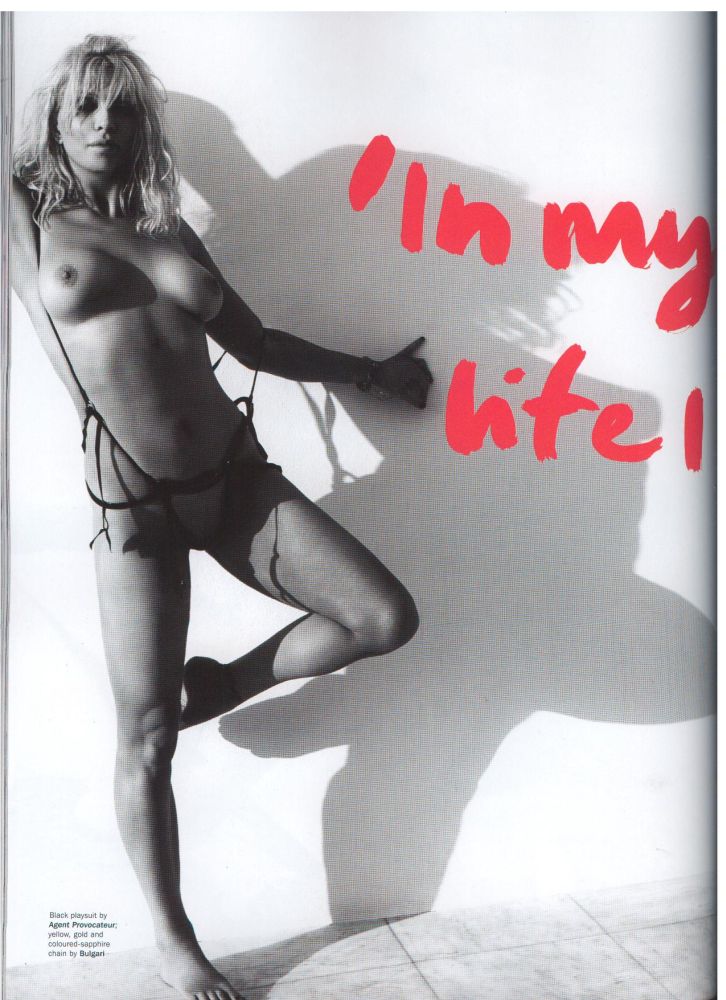
Back in London I couldn't resist getting a copy of 'Dirty Blonde' - the published snippets of the diaries of Courtney Love, my fave rock goodess along with PJ Harvey.

A few reviewers expressed the belief that the item was too personal to be published. But then she's always been a girl who wears her heart on her sleeve, it's part of her whole persona. A creative mind is revealed, intelligent and thoughtful although rather confused and messed up at times, as you'd expect.

It can be said about rockers that they are not simply musicians but works of art in their entire persona. Their lives can be read as works of art.

A cynic may dispute this, and believe me to be a dupe of the consumer celebrity culture when I say this. But I believe there to be a difference between musicians with some talent (although we may dispute which rockers have talent and those who lack it) and the mindless celebrities who are famous for simply being idiots on reality shows. That kind of celebrity is instant, but the celebrity of a serious rocker is not.

The personality of celebrity side by side with the talent (of art, music literature) appeared to have been first personified by Frida Kahlo, the Mexican painter with her endless self portraits in her floral dresses. Although I'm not her greatest fan, it would be wrong to suggest she was talentless or broke no ground in the way of art. Her self revealing paintings were a new trend in the sense that they directly attempted to depict what was in her psyche.


It appears that Courtney Love gets slammed quite often for doing through music what Kahlo did via art. The feminist movement has claimed Frida, regardless of the fact that she was not herself a political feminist. Nor was Sylvia Plath, another feminist heroine. Love does in fact describe herself as such, but the movement does not quite know what to do with her, for obvious reasons.

Saturday, November 25, 2006


Meet the Feebles.........

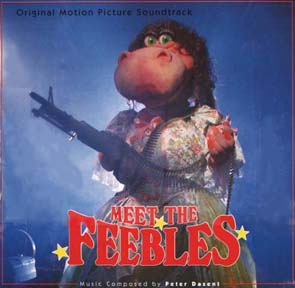
Lord of the Rings this aint. Nor is it suitable for children. But anybody interested in the career of Peter Jackson should check out his production of Meet the Feebles.

It is, to sum it up in one sentence, a very dark take on the Muppets. A strong stomach, a black humour with a taste for the macabre or the degenerate is required. Meet Heidi the Hippo, the Miss Piggy equivalent. Tragically in love and ever faithful to her husband Bletch the Walrus, a criminal adulterer whose only true love is money. Now our poor hippo has a weight problem, which is excacerbated by the heartlessness of the walrus (she addresses her pain via her sweet tooth) In turn her weight gain makes him use the pleasures of his new girlfriend, a slinky, model thin feline, even more. A catty cat who takes open pleasure at the pain of the hippo. Vicious and tragic circle.

Meanwhile the rest of the cast have their own problems. The playboy rabbit Harry has some ghastly illness which his doctor thinks is AIDS. Wynard the frog is a Vietnam veteran with a severe drug addiction.

The show reaches its climax when Heidi the Hippo decides she can take no more. After a failed suicide attempt when Bletch finally decides to ditch her because she is past her prime, her feline rival makes one last jibe at her while she has a gun in her mouth. That mistake costs the cat her life - and most of the other feebles! Heidi turns the gun on her and proceeds with a massacre of the entire studio.

Great fun if you like this kind of thing (and I do). You may enjoy it simply if you are a fan of the original muppets (as I am).
Lets hope Kermie stays faithful to Miss Piggy is all I can say for now.......

Update/note: A few years back I wrote a spoof rap involving Kermie, Miss Piggy and Kermie's new girlfriend, in which Miss Piggy's reaction was not unlike that of Heidi the hippo! Kermie lapped up the attention and was ultra laid back in his classic style while the girls were at each other's throats threatening blue murder. I'll try to dig it out. Not sure if the Muppet presenters will want it though. I'd like to know what Jackson thinks though.

Thursday, November 23, 2006

Posting has been a little sparse this past week, precisely because I'm out of the country.

My partner and I are in Wellington, New Zealand for the next few months. It's a very scenic coastal city (built upon hills), far far smaller than London with a much slower pace of life. The pace of life is similiar to that on the South coast of England, somewhat like Brighton. There is also plenty of greenery around, and I'm staying just by a nature reserve in an outer suburb (which is not very far from the city centre, a short bus ride in fact!). After just ten minutes in town Mr Contraire (he was born and grew up here) bumped into an old schoolfriend of his outside the city library (which by the way has a great selection of books, I found a few rare Emile Zola translations).

The pattern of my blogging will be pretty much the same (apart from late next week and the following fornight when I'll be touring the South island). Posts may focus more on international affairs and I will of course be commenting on politics here, as well as the occasional comment on Britain from what I can glean on the web and on BBC news.

I would upload a picture for you but I'm using an apple mac and am not sure how to save it yet.

Wednesday, November 15, 2006

The Guardian seems to do a great disservice to female writers. Instead of employing journalists of integrity it pays airhead hacks like Zoƫ Williams to write the most banal and trivial gossip about their middle class lifestyles, who have as much sensitivity in their small minds as does a pebble.

This woman has a couple of preoccupations, one of which is abortion. It isn’t enough for her just to be pro choice, you have to be in favour of unlimited abortion up until birth. Reducing the time limit, to her is just ‘a new way of saying you are anti abortion’. Never mind the people who are strongly pro choice yet are still not opposed to reducing the limit be a couple of weeks (Britain’s being among the highest in Europe). In an edition of the paper earlier this year she spoke of a ‘mawkish sentimentality over the foetus. Not only this but she manages to offend and alienate even the supporters of a liberalisation in the law (see link). A fanatic if ever there was one.

A few good responses to that article:

FinnChow
November 10, 2006 10:49 AM
I agree with Evan Harris 100%. I fear that it won't be enough for Zoe Williams though. Until we're all laughing and joking about abortion and treating it as though it were no different from having a tooth removed, I don't think she's going to be happy.

solarsentinel
November 10, 2006 12:02 PM
Evan said, Ms Williams laments the lack of open debate in Parliament about liberalising a 39-year-old rule. But if the response of the pro-choice lobby is to attack their allies, then it is hardly surprising that politicians are not willing to go there.
Free choice is only possible to the extent that one appreciates the nature and consequences of one’s actions.
The quickest and most effective way to remove someone’s freedom of choice is to lie to them.
In a parliamentary democracy, lying is frowned upon, so the next best way to remove someone’s freedom of choice is to keep the truth from them.
This is hard to do when there is open debate, since open discussion of facts educates and informs people’s choices.
If the pro-choice lobby are pressuring politicians into keeping quiet then they are undermining everybody’s freedom of choice, but most importantly, the freedom of choice of women who cannot make an informed choice without all of the facts.
That makes the pro-choice lobby hypocrites, and those who are really interested in freedom of choice should not listen to them, but should make up their own minds …. after listening to the debate.
When you deify something like free choice, it gets corrupted.

Goodgirl
November 10, 2006 11:07 AM
I have always wondered why a woman miscarries a baby at five weeks, but aborts a foetus at 24! What is the difference? - therein lies the moral issue in abortion. No matter where ons stands on it, there, but for a mishap (whether by abortion or miscarriage), is a human being. Pro-choice ignore this completely, along with the pain of many women who have had abortions lawfully. I am definitely pro-life, but neutral about the legal position, because whatever the law says, as humans we always have a choice to make and/or exercise, (whether legally or not). E.g. I have a choice to beat up a person that I do not like, or even to kill them, but the law prevents me from doing so. Therefore abortion being legal does not remove the dilemma of the effect of the act on the foetus, and whether or not it (foetus) requires protection from harm just as I, a fully formed and visible human being, do. For every woman proud of her abortion, there are 8 who are not. This is an issue that just will not go away, as medical science pushes the frontiers even further.


People like Ms Williams and the 'abortion rights' group she supports have an audacity labelling their opponents as 'anti choice'. Indeed they are the ones who oppose an informed choice. They oppose a public inquiry, blatantly ignoring the existence of women who are not so proud of their abortions. They knowingly lie and mislead, denying any medical facts that are not so favourable to their support for unrestricted abortion. Indeed they will not be happy until we are all laughing and joking about foeticide.

Leaving that aside her witterings about genealogy and the derision of those who are interested in tracking their ancestry as being on a par with those who view ‘animal porn’ sum up the bigotry and shallowness of this loathsome individual. Earlier this year she made infantile comments about the eating of ready meals (what the Americans call ‘TV dinners’) as being a result of ‘social progress’ – namely her beloved and oh so bourgeois ‘feminism’. Glad that one shallow person is so content and smug in a shallow capitalist society where people have no time to prepare a proper meal.

Journalists were once supposed to be public servants. The smug and privileged Williams, on the other hand, is nothing but a public menace.
Decline of the Novel

It’s not a question of being a literary snob. I am sure that plenty of highbrow types scout the latest in contemporary fiction and dissect the latest fads in prose.

But nobody writes a novel the way they used to. I spent hours of pleasure reading the classics of the 19th and early 20th century – Thomas Hardy, Dickens, the Brontes. Besides English literature I have taken great pleasure in Dostoyevsky and Tolstoy, alongside the works of Emile Zola. Nothing beats the great American novel written by John Steinbeck.

The description these novels gave could transport you back to the English countryside in the mid 19th century, or the slums of London or Paris. Or California at the turn of the century. Or the lives of the Russian aristocracy. Dostoyevsky’s characters were the most complex in literature, extreme yet so human.

What has happened? I don’t mean to knock all modern fiction, indeed some of it I find witty and entertaining at times. But the description is not there, neither are the characters so rounded. There are a few exceptions but I can count them on fewer fingers than I can the great classics. Surely the format of the novel hasn’t really exhausted itself so, as is sometimes claimed? Why do they no longer write books the way they were once written?

Saturday, November 04, 2006


Pole Dancing Kit

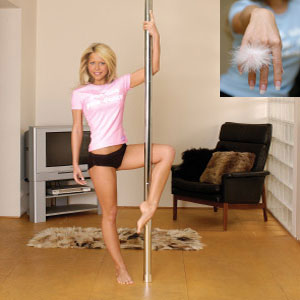
What should I make of this 'toy'?. I was initially under the assumption that it was a doll, having recalled seeing a pole dancing doll elsewhere, and got called a 'sectarian moron' and an illiterate (sob) for my error! A careless mistake maybe but not one that warranted that kind of hostility. Anyway, enough for that for the time being.

I would tend to view the sexualisation of childhood as being wrong, and that Tesco were wrong to market the product as a toy. An item of such a description probably belongs in Anne Summers or a similiar shop.

All the same though, is it any different from the constant promotion of sex that children see all the time, in teen magazines and elsewhere? I think not, so it is not something I'd make a big deal over. But I'm sure on this particular issue Scottish Socialist Voice would be in one voice with the Daily Mail.

It is also baffling as to how a group which give condoms (and information on how to obtain abortions) to schoolchildren reconcile this. Perhaps they don't mind children having sex, it's just the association of pole dancing with sex workers that they can't abide. Never mind the fact that this sex toy is not designed for commercial gain, but appears to be designed as an erotic plaything. If you don't mind children having sex then why object to them using toys with it? Say what you will about the commodification of sex etc, but there was a strong sense of moral outrage in the passage quoted on that blog. I am sure that the images children see on television of pop stars and in advertising have more of an impact on them than does any pole dancing toy. Sexualised clothing aimed at children seems to be purely a reflection of a culture they already are subjected to. It is the market finding its niche. The hyper sexualised culture in the West after the commodified sexual revolution is problematic in many ways, but save for jumping on the moral majority bandwagon and asking the State to censor media or ban the sale of items there is little one can do. The State has no right to censor material nor curb sexuality.

Capitalism makes a commodity out of everything. Sex especially perhaps because it is a primal instinct that obviously sells very well. The market works very well in this regard. Ask anyone who works in advertising. It does strike me as being more of a problem when children are targetted - but then I am not of the opinion that children under the age of 16 (or 18-19 in some cases) are really old enough to be having sex anyway. Sex ideally should not be a commodity sold to them. But it is even slightly unrealistic for me to say this, as sex is everywhere in advertising anyway. The only way you could possible keep kids away from it would be to teach them at home and never let them watch tv or read magazines. While parents will do what they can it is probably inevitable that some children will have sex, so if they do it is better they be given access to protection than not. Removing a daft toy from a supermarket will make no difference.

Most objectionable to me is the blanket assertion by the Scottish Socialist Party that all strippers have been or are being sexually abused. But with their latest resolution which advocates the continuation of criminalisation of the sex industry (on the Swedish model, albeit, targetting the 'demand' rather than the 'supply') such nonsense becomes explicable. The text of that resolution and my comments are in the next post down.

Thursday, November 02, 2006


Pornography, Erotica and L'Histoire d'O

Laura may be right, I tend to go with the view that abusers are made, not born. But I doubt it is down to pornography.

I got thinking a little when one of the contributers to that thread on her blog differentiated porn from erotica. I pointed out that the lines are often blurred, but there also appears to be an implicit snobbery in arguments which are pro erotica but anti porn. Erotica tends to be highbrow material while what tends to be classified as porn tends to be cheaply produced and lacks artistic merit. One person's porn may well be another's erotica. Where, for instance, do Black Lace novels fit in? Are they porn for women or erotica? I wouldn't like to say really. Or what of the French movie 'Baise Moi', containing graphic scenes of sex and violence? It was not generically porn as it was not designed soley for titillation, yet you would be hard pressed to define it as 'erotica'. It's simply a violent film with images of real sex. But those who support banning pornography of any description would be inconsistent if they did not apply it to this movie. This is what makes the proposed law, banning people from holding 'extreme violent pornography' look subjective and almost impossible to impliment (leaving aside the issue of civil liberties). The fact that 'Baise Moi' was made by a woman makes no difference to it's contents.

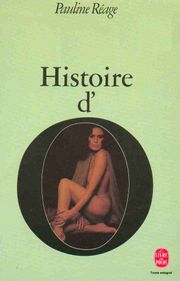
I had to mention the Story of O as that is one particular work where the boundaries are somewhat blurred. The novel was written by a woman, yet when the author of the piece was unknown her gender was disputed, often by feminists. Part of this was obviously due to the masochism of the fantasies and the totally submissive nature of the female character, whose will ended up being totally broken by libertines of the Sadean nature. But I also suspect it was due to the prurient and Victorian view that a woman could never write such 'depravity', that such fantasies were the province of the male. The virtue of womankind dictates that she must be sexually pure.

This is obviously false as women do have submissive fantasies. Some feminists seemed to buy into the Victorian view of female nature and idealised women the same way that some Marxists (especially of the Leninist nature) idealised the working class. It was a naive and patronising view which was also elitist in nature, implicitly laying down a restrictive code of sexual conduct.

The author of the novel did write it for her partner Jean Paulhan, who was a fan of Sade's literature. This does raise a few questions about how 'in control' she was when creating the novel, but it does not mean she was under duress or suffering any kind of 'false consciousness'. Paulhan himself claimed to have felt slightly disturbed by some of the scenes. I am not easily shocked but I couldn't help but cringe a little, and it was not a comfortable read. But such literature is interesting due to what it may say about fantasy and the subconscious in relation to sexuality.

Such a novel could not have been written in English. It's surrealistic tone the whole way through, along with it's Sadean ethos, put it firmly in the French tradition of erotic literature.